

Note: This essay involves discussions of grooming, child sexual abuse, and femicide.
Several years past the point of trendiness, I decided to finally finish watching the anime Chainsaw Man. I had begun viewing the massive hit anime nearly three years ago before puttering out, and my boyfriend—so much a fan that he keeps a figurine of one character on a shelf in our apartment—encouraged me to give it another whirl before the next season arrived.
Beginning in late 2018 and penned by manga artist Tatsuki Fujimoto, Chainsaw Man is a fantasy story concerning a sixteen-year-old boy known only as Denji, who lives in abject poverty. Denji inhabits a parallel version of our world inhabited by malevolent entities known simply as "devils," who manifest in the form of different fears and concepts—guns, infinity, the future itself. After being beaten to death, Denji fuses with a cute devil that he keeps as a pet and becomes, well… Chainsaw Man, a human-devil hybrid who lands a cushy-ish job hunting devils in a government organization.
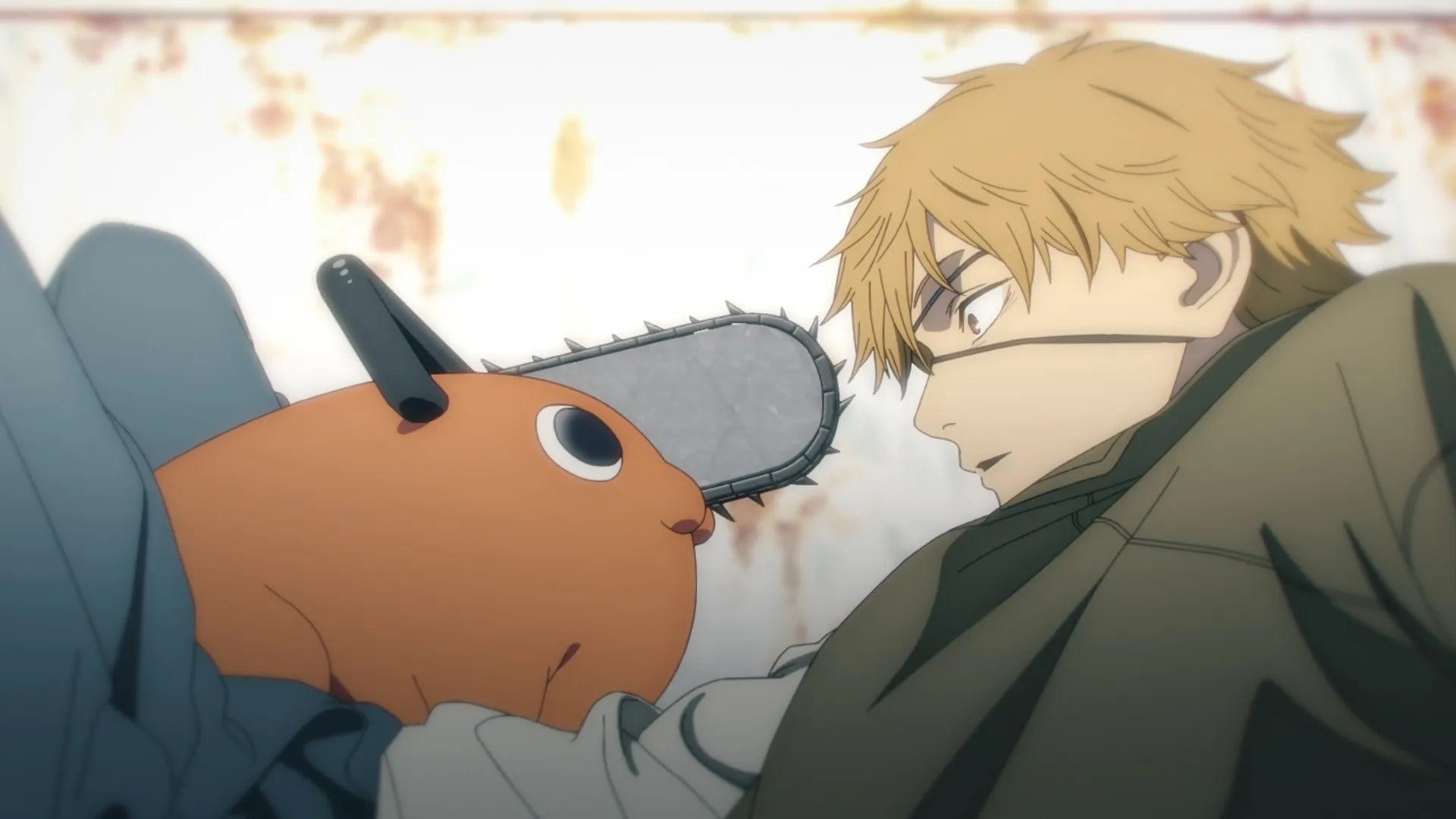
This is all I can really tell you, as I am one of those much-maligned "anime only" fans. My boyfriend reads the manga as it releases, so the best I can do beyond that is secondhand information and incidental spoilers I didn't mean to see.
To say Denji lives in poverty is underselling it. At the start of the series, he has already sold an eye, a kidney, and one of his testicles on the black market. He lives in a dilapidated shack subsisting on scraps, weighed down by his dead father's debt to organized crime. He is living at the nexus of impossible circumstances for a boy his age, desperate for both the essentials for survival and the typical material cravings of a teenage boy—that is to say, fun, friendship, and lots of time spent with attractive women.
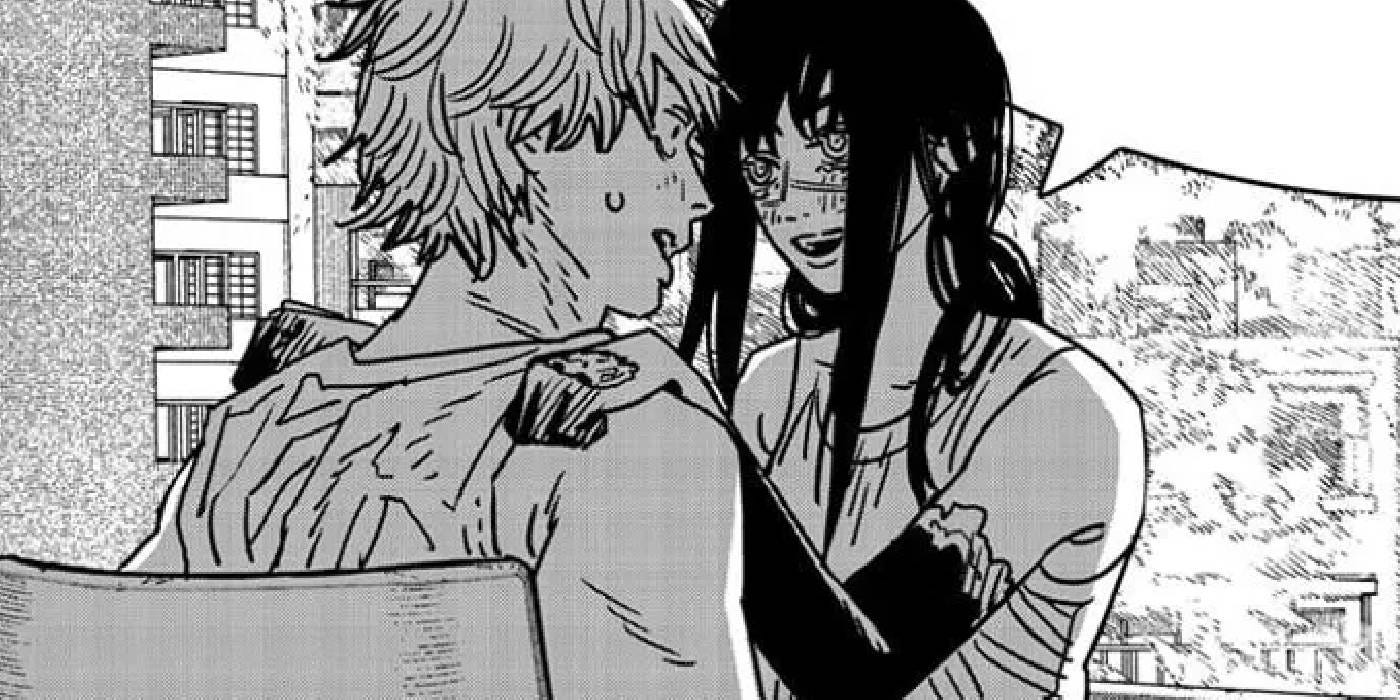
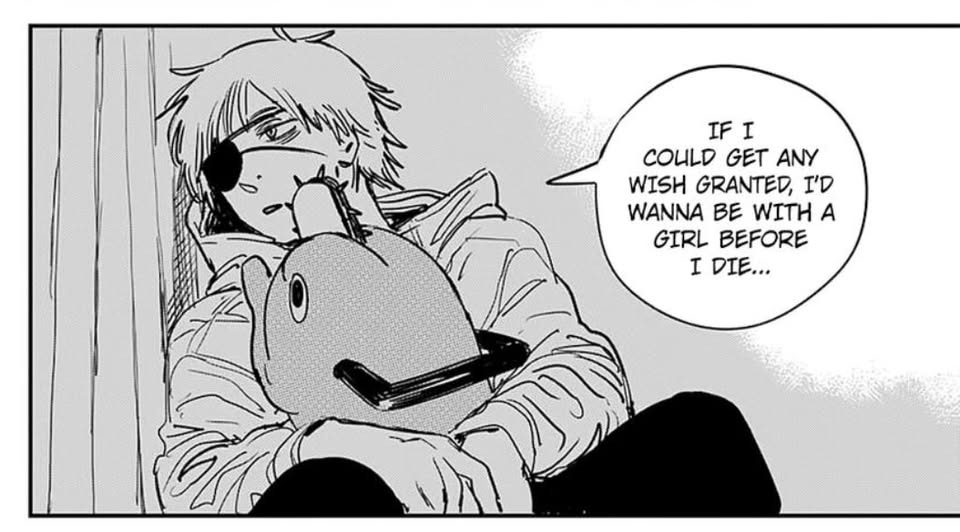
Denji's fixation on sex and having sex with women is a central motif of the series, one that carries through the still-ongoing manga seven years later. There is an almost grotesque quality to how this manifests. It is used to manipulate him, particularly by his boss, Makima, a terrifying adult woman who regularly takes advantage of the fact that her young charges are attracted to her to goad them into endangering their lives. When Denji has his first kiss, with another adult woman who is very drunk and forces herself on him, she ends up vomiting in his mouth. She later attempts to have sex with him in her apartment, but changes her mind. Denji never seems to fully know how to feel about any of this, which is expected. He's just a kid.
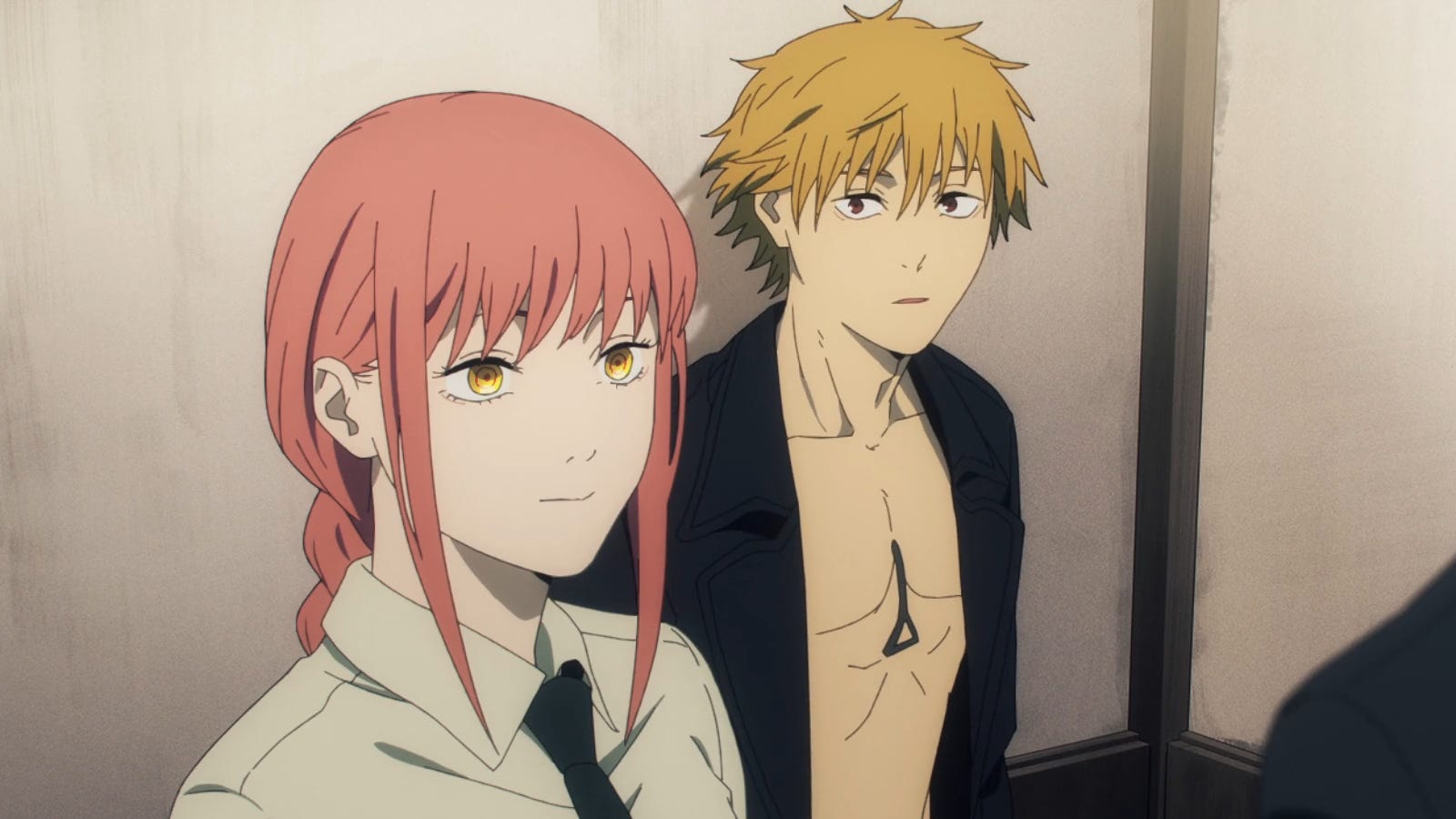
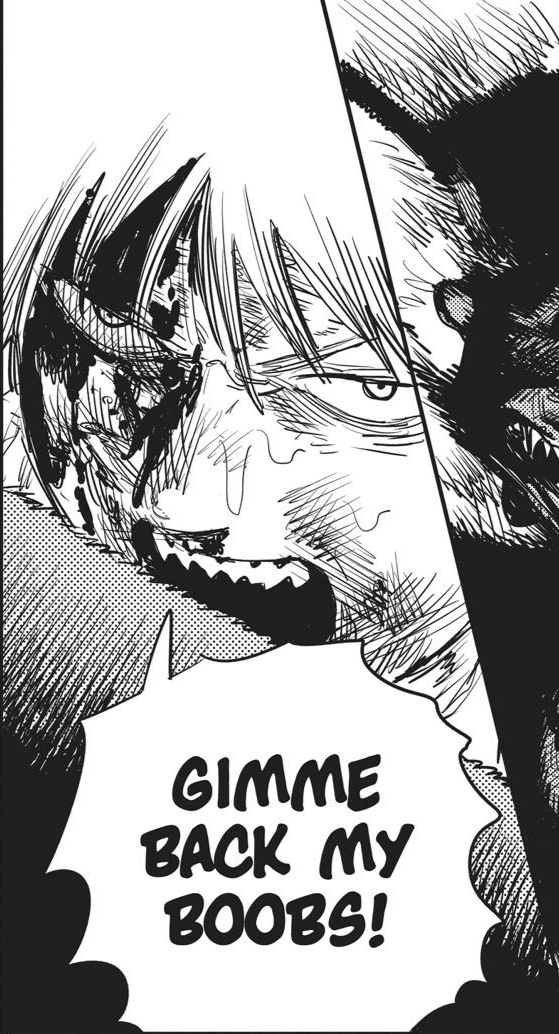
Even at his lowest, happy just to eat a piece of plain bread, he bemoans the fact that, on top of everything else wrong with his life, he'll never know a woman carnally. This is perhaps the greatest disturbance to his psyche. In the early chapters, he is motivated into missions at work by promises that he'll get to touch his female coworker's breasts as a reward (at her suggestion). He is utterly fixated on this end goal. When Power, the aforementioned coworker, is eaten by a devil, Denji latches onto his limb and proclaims: "Give me my tits back!"
Within a few episodes, I started growing tired of this. At thirty years old, I had become quite the miserable feminist crone, poring over literature about the role of women in society and where objectification and sexualization fits in. I asked my boyfriend if, in his opinion as a man attracted to women, this was an accurate portrayal of the teenage male experience.
He said yes, which was what I expected. He also implored me to give Denji a bit of a break—to imagine myself in his shoes, a boneheaded highly hormonal kid alone in the world, living hand to mouth at the best of times, looking for happiness in any way it presents itself. I thought it was a compelling case, as much as the constant talk of libido in the show continued to wear on me. Was it annoying to me? Yes, but it made sense.
That being said, I countered him just a bit: Why should we permit boys or men to objectify women just because they've suffered in life?
After a bit of measured back and forth, we stepped back and reminded ourselves that this was a cartoon about monsters with knives sticking out of their heads. Still, the conversation and what it entailed stuck with me—not because I found Chainsaw Man expectedly sexist, but rather because of the way it deviated from what I expected from anime made for men.
I used to be a big fan of shonen anime when I was a young, tomboyish child. I would wake up early in the morning and stay up late every Saturday and tune into Fighting Foodons, Beyblade, Yu-Gi-Oh, Shinzo, Pokemon, Dragonball Z, Naruto, Tenchi Muyo, and Digimon. Apart from magical girl shows, these were among my most favorite series, typically aimed at young boys.
These shows were also nearly always heavily censored when I viewed them from overseas in the United States. So I was in for quite a shock when I started buying copies of Shonen Jump and tankobon volumes of my favorite series—which were largely left alone in manga form when imported to the west—and saw what had been hidden from me. Blood and guts, yes, but what shocked me more than anything else was the rampant sexuality. This is typically known as "fanservice" among nerds: sexy or suggestive scenes and illustrations meant to draw in and entertain horny teenage boys.
This manifested in a myriad of ways. I remember leafing through volumes of Yu-Gi-Oh and watching as most of the few female characters were often reduced to little more than a pair of breasts attached to a host parasite. In Naruto, the titular protagonist would perform a jutsu that would turn him into dozens of naked women to prank his friends. In Tenchi Muyo, Ryuko was regularly naked for no reason.
I couldn't even escape this in manga made by or for women. In Tokyo Mew Mew, I watched the twelve-year-old protagonist be groped and touched by much older men (and aliens). In the manga edition of Ranma ½, Ranma's female half—ostensibly an underage girl—would regularly pop up topless in the name of hijinks.
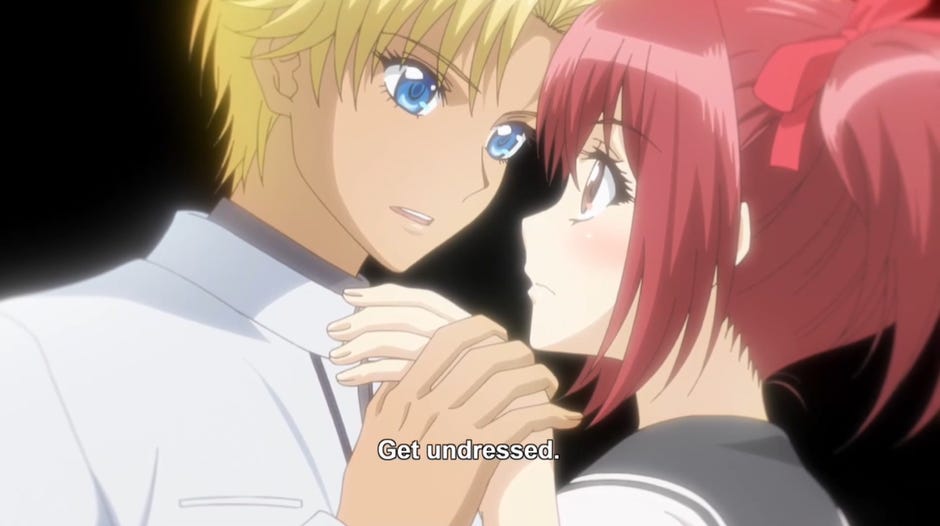
It could be argued that these portrayals in manga, which I discovered as I was on the precipice of puberty, were crucial in shaping my realization of my role in the world as someone female. Right as I was noticing all these characters being sexualized at every turn by their peers, by older male characters, sometimes by literal babies, I was starting to face new scrutiny over my growing body and my first tastes of sexual harassment in the real world.
I had long been proud to be one of the boys, as it were. Many of my close friends at school or camp were boys, specifically because we often shared the same interests. For the first time, this pride was faltering. Developing into a so-called woman was alienating me, and it was being made clear.
In October 2024, my boyfriend and I had tickets to see a rock concert I'd been looking forward to. We had both worked that day and were due to go back to work the next, and we soon realized after traveling into the city that the show would not end until well after one in the morning—meaning we wouldn't be home until the wee hours. After a brief discussion, we mutually agreed to do something shorter instead.
As we searched for something nearby, I noted that a Japanese animated film was playing in a theater a few minutes away. It had a robust Rotten Tomatoes score and the premise looked pleasant. We quickly snapped up tickets, got our popcorn, and sat down in a large theater to watch a movie we knew basically nothing about called Look Back.
The film was as good as the reviews had suggested, but something was bugging me. The characters looked so familiar, so distinct in a way I felt like I knew. It wasn't until after we finished that I realized this was because Look Back was based on a web series by Tatsuki Fujimoto, the author of Chainsaw Man, and the art style reflected it.
We're going to enter spoiler territory now, so look away if you must.
Look Back is a story focused almost entirely on the experiences and stories of girls and women. Specifically, it tells the story of burgeoning artist Ayumi Fujino, who forms a friendship with her truant classmate Kyomoto, who doesn't come in due to profound social anxiety. The two pursue a passion for art in tandem, making comics together and cultivating their skills using the other as motivation. They make and publish manga together under a joint pen name—a plot point shared with the shonen series Bakuman—and grow successful. The two diverge when Kyomoto decides she wants to go to art school, while Fujino gets a coveted serialization in Shonen Jump.
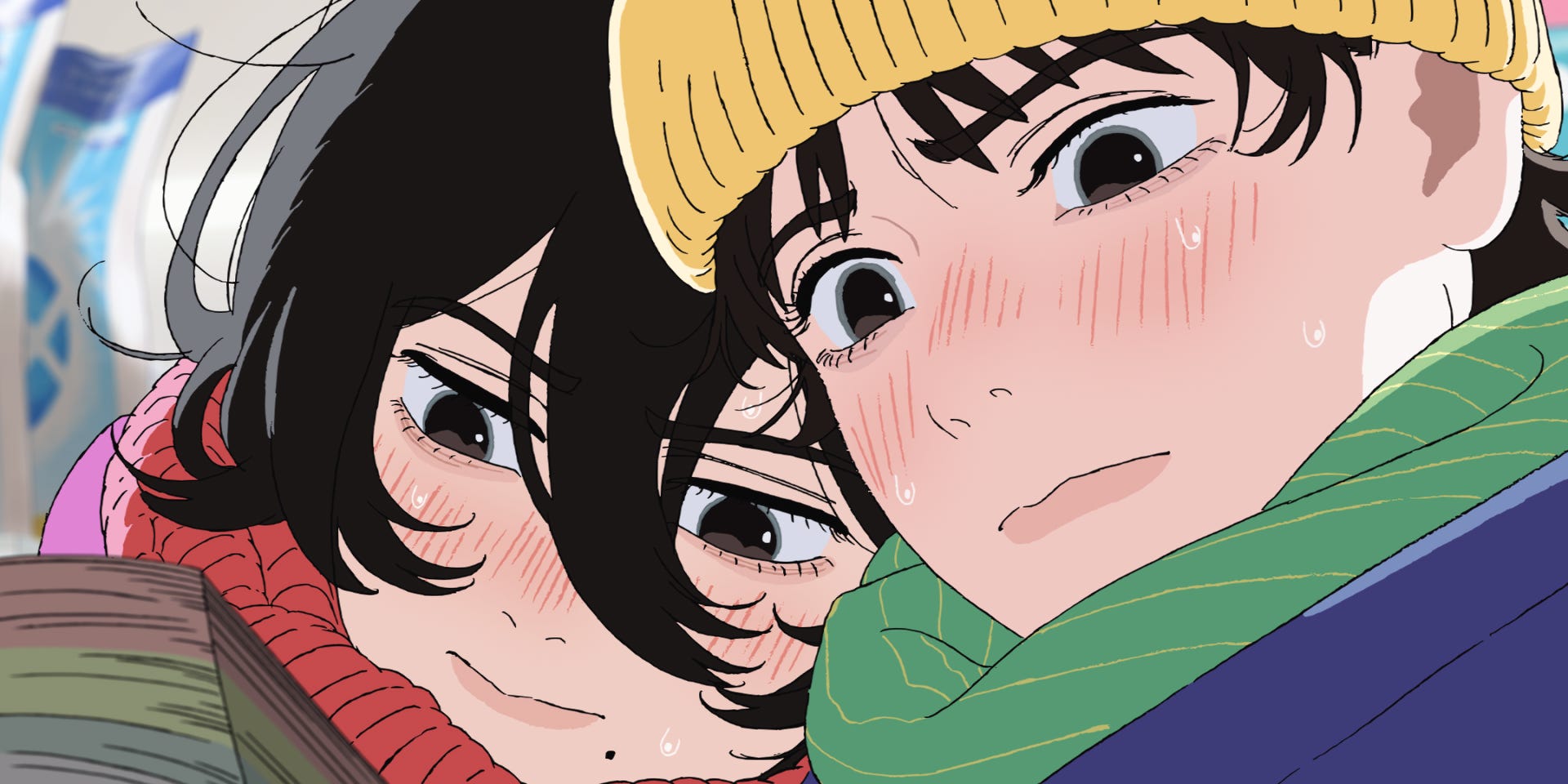
In the winter, a man wielding an axe gets onto Kyomoto's campus and brutally murders her in a fit of rage aimed at the school. This directly references the devastating 2019 arson attack on Kyoto Animation studios, where 36 people were killed (Kyoto Animation is also well-known in the anime industry for employing a high volume of women). Fujino is plunged into grief, and must overcome her shame and pain to continue on with her career in honor of her fallen friend.
Look Back, like much of Fujimoto's work, is a profound exploration of what it means to be young and struggling. It is also notably absent of sexist tropes, objectification, or insulting behavior extended to its female leads. To the contrary, Fujino and Kyomoto are presented as thoughtful, layered young women who are unapologetic in their pursuit of success and skill. Their relationship is so close and complex that many say it verges on romantic. They are free to be bedraggled, angry, free, tormented, tired, affectionate, smug, thoughtful, and creative. They are women defined by nothing but their own inherent humanity.
As we continued to watch Chainsaw Man, and as I continued to knead the proverbial clay of this gendered discussion in my mind, I thought back to what I felt when I watched that film. If you'd asked me, before I knew its origins, who created Look Back, I would have probably assumed it was a woman. To be quite honest, I felt understood by Look Back. It reminded me of my youth, scribbling comic strips on printer paper and dreaming of making graphic novels. In one scene, Fujino walks home from school in the rain. She skips, stomps, runs, leaps into puddles, and screws up her face in dogged determination.
Ah, I remember thinking as I watched it for the first time, yes, that's what it was like.
I am not of the mind that a man could never understand anything about womanhood. Far from it: I think it's to everyone's benefit that men extend enough empathy to try. We are, after all, the same animal at the end of the day, and our base needs overlap far more than some might think. That being said, I was admittedly surprised that a male author could capture the pathos of being a young girl so spectacularly. It truly takes a deft hand and a sharp mind to create such resonance in the soul of a person whose experience you just didn't have.
To anyone who reads or watches Chainsaw Man, this deftness is probably unsurprising. Fujimoto is already considered one of the best in his craft for a reason, praised across the board by creatives around the world. And once again I return to the fact that, as much disgust as I felt when Denji would fixate on making it with hot chicks, I couldn't help but feel that even his outsized perversion had more depth than most shonen fanservice fare.
The chief observation I made was that, despite the fact that Denji seemed to always be seeking sexual gratification, its reality rarely (if ever) seemed titillating, flowered and exciting. If anything, throughout the handful of scenes I got, there was always a distinctly uneasy quality. Denji would flounder as women (usually much older than he, a child) would play on his adolescent urges, toying with his mind and making him promises of intercourse and sexual play that, in the moment, he never seemed fully sure he would want.
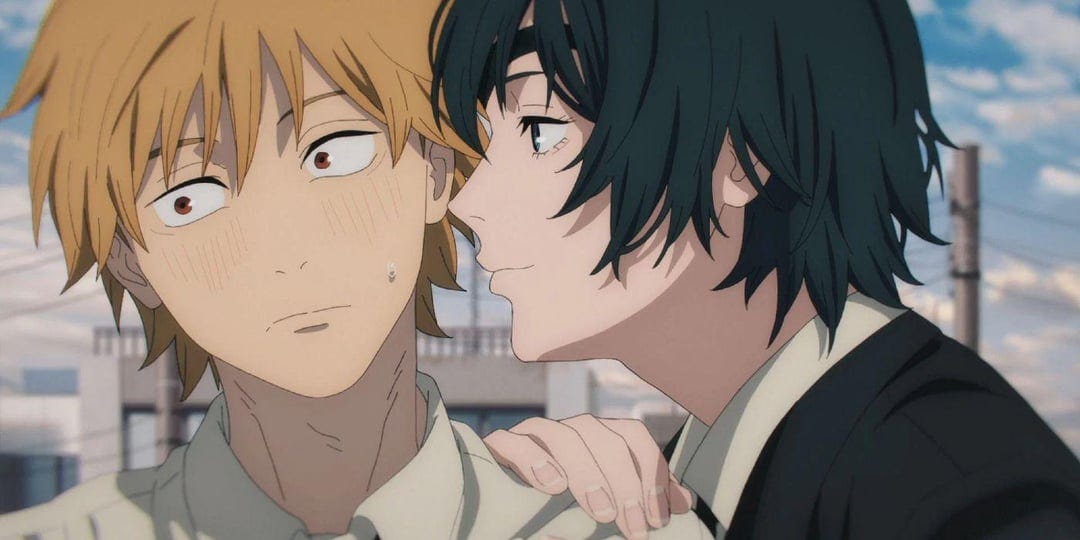
It seems that, just as his dreams are within reach, their glimmer grows exponentially less enticing with each milestone. When he is permitted to touch a woman's breasts for the first time, the goal he's fought tooth and nail for, he reels from how hollow he feels after the fact. When that aforementioned adult woman offers him sex, he wonders if he'd even want it. As even just the first season of the anime bears on, Denji spends less time racing toward the goal of sexual conquest, and more time mulling over the implications of what that might entail.
In this sense alone, Denji transcends the typical trope of being a horndog teenage boy. He is a human being, suddenly faced with the prospect of understanding life beyond abstract concepts and grappling with what the material reality of intimacy actually looks like. And, unfortunately for Denji, its earliest steps often veer into the territory of being groomed by adults and baited into violent favors in exchange for touches. In this, he is both supremely human and, in a way, still locked in a cycle of being fed circumstances that are hard to swallow.
I won't pretend that Chainsaw Man is a series absent of sexism or objectification. You can find plenty of illustrations of its female characters in swimsuits et al, catering to the male fans who will argue over who is "best girl" like they're prize ponies. But at the same time, Fujimoto's writing exposes the doublespeak of the ultra-processed way women and girls are sold to men versus the reality of sexuality and human intimacy.
The posters on Denji's wall and the dirty magazines he treasures are a facsimile, a simulacrum of sex and women sold in a plastic package. He has bought into this fantasy, and it makes for a harsh wake-up call when he experiences life beyond just surviving until the next meal.
While women and girls statistically experience the lion's share of sexual abuse in the world, it goes without saying that men and boys are far from exempt. In the United States, one in ten rape victims are men. One in twenty boys under eighteen experience sexual assault. Many predators and their apologists purposefully exploit the cultural concept of the sex-crazed young boy to obfuscate the fact that they abused a child.
When Denji is offered sex by older woman and he questions if it's supposed to feel as strange and confusing as it does, I can't help but see pangs of the young girls who are told they're "mature for their age" by older men robbing their cradle, leaving them holding the bag of confusion and hurt once they're done having their way.
Denji's failure to get a girlfriend, lose his virginity, or escape his endless cycle of sexual anonymity is a recurring motif in the series and a running joke in the fandom. Ultimately, I can't tell you any more about how he tries and fails because I am, regrettably, still an "anime-only" at the end of the day. But from what I've gathered secondhand, the scant amounts of sexual activity Denji has accrued—in the hundreds of chapters since where the anime leaves off—don't seem to deviate much from that borderline grotesque, uneasy tone that you feel when he's manipulated by Makima or getting puked into.
One thing remains steady throughout every chaotic twist and turn of Chainsaw Man: Denji can't catch a break, and his sexual failures are often at the epicenter.
In the shonen series Bakuman, about two friends who become manga artists with an ensemble of similarly creative colleagues, one of their only female peers in the field is a woman named Yuriko Aoki. She is a demure, refined woman who creates stories with elaborate, detailed illustrations, and stands out in a lineup of Shonen Jump authors who are almost entirely men. As such, she struggles with the learning curve of what's expected in writing stories for young boys.
Relatively early on in the series, this manifests in her being told that she must add more fanservice to her latest serialized manga. She's explicitly told to add copious amounts of panty shots to her high school series, and the results are lambasted by the characters as being unsexy and bland—it's framed as if she lacks a critical honed skill, one that takes unique finesse and comprehension.
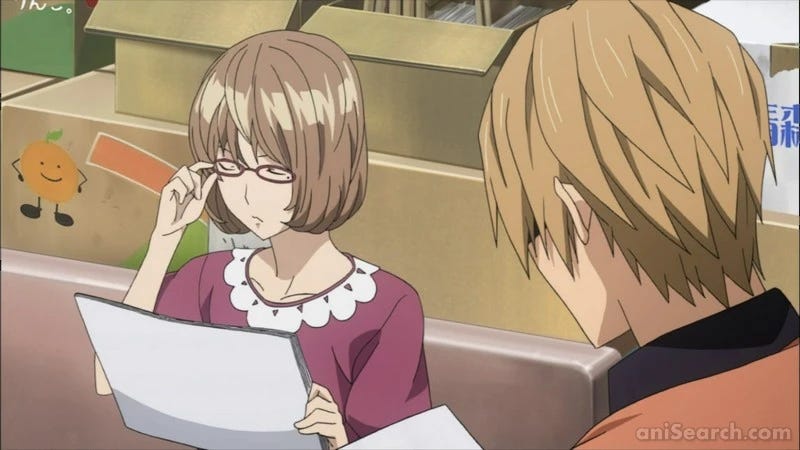
As the storyline progresses, a character named Takuro Nakai tries to capitalize on the situation. Like Aoki, Nakai stands out among the other mangaka: He is fat, foolhardy, and often portrayed as gluttonous and egotistical. He also, for a time, is fixated on Aoki as a love interest. At one point, he camps outside of her house, drawing nonstop in the snow to guilt her into taking him on as a collaborator. During the panty shot subplot, with their collaboration long over and his romantic eye on someone new, he arranges a meeting with her.
With more ego than ever, Nakai icily makes Aoki an offer: He will give her the help she needs if she dates him. She slaps him in disgust, weeping. Later on, a tertiary character says he will help Aoki with her panty shots by spending time with her in minimal clothing and compromising positions. Naturally, we get a fantasy illustration of Aoki in the nude, shyly posing with her breasts and buttocks mostly in view. Takagi, one of the male protagonists, sits beside her in shock but says nothing. "At this rate, Aoki will never get over her distrust of men," he laments internally.
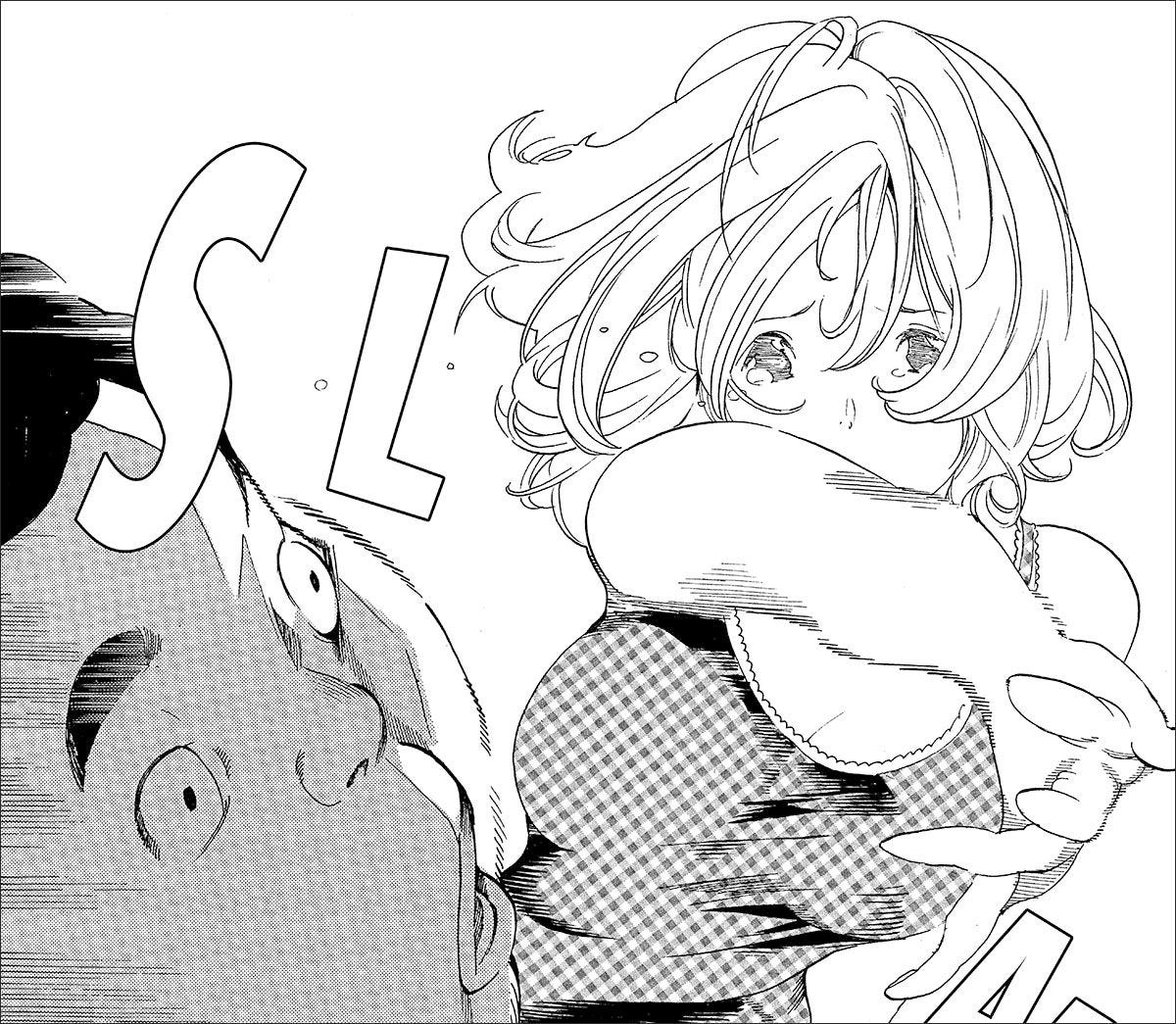
Utterly defeated and humiliated, Aoki hangs her head in shame as this man she’s never met before details how he'd debase her in the middle of a café. Another mangaka character, Fukuda, then bursts into the scene and shoves the pervert: "I'll teach you how to draw panty shots," Fukuda heroically proclaims to Aoki, ending the tribulation.
This is our flowery resolution to a story of a woman being brusquely told she's not sexualizing cartoon fifteen-year-olds well enough.
Bakuman, warts and all, is probably one of my favorite manga of all time, but this sequence has always sat in my mind whenever I think of the role fanservice—particularly of young girls and women—plays in comics and cartoons for young men.
While it is undeniably troubling that this storyline is presented as anything but horrifying prolonged sexual harassment, it's also completely realistic in its portrayal of what women often encounter in the production of media, especially when it's aimed at boys and men. How many bombshell actresses have horror stories of sexual abuse? How many female singers are instructed to lean into sex appeal? How many cases of workplace harassment occur around the world every single day?
All this to say that it would be expected for Chainsaw Man to merely regurgitate the simulacrum of sex that has appeared in media for years. It would be safe for Fujimoto to portray sex as the one positive of Denji's chaotic life, to have his erotic escapades be the comic relief that lets the audience rest from the tension to leer and salivate.
This is not, however, what Fujimoto does, and Chainsaw Man is all the more complex and deft for it. Shonen is a vast and unique genre, one that takes the challenge of writing stories for young boys and transfigures it to fit the confines of a wide range of subject matters and styles. While there are genre conventions, commonplace imagery, and recurring themes, there are few strict rules for what a shonen series can be, in the same way there are few precise confines for a fantasy novel.
All that's required is a story that will resonate with teenage boys, and maybe more. And let us not forget that teenage boys are the same species as the rest of us.
Like most people who are sexually active, I've had my fair share of awkward, disgusting, and even traumatizing experiences. Growing up and consuming media and cultural products and ideas—including anime—often reflected a version of sex that was deeply incongruous with that reality. I very vividly remember walking through the city as a tween and seeing a large ad for Gossip Girl where two characters were engaged in glamorous, exciting, and carefully censored sex. Part of me wondered, was it really that simple and glitzy?
Contrary to the alienation I’d felt from seeing sex portrayed in countless films, television shows, comics, and songs, something about Chainsaw Man’s distinctly unpleasant portrayal struck a chord with me. As with Look Back, a part of me felt understood by Fujimoto’s narrative choices.
Our experiences are as complex as we are, and humans are complex creatures indeed. What Chainsaw Man does is transgressive not because it’s secretly feminist, but because it portrays what's often a stark reality for people of all genders, especially teens. It presents the excitement and thrill of shonen action with the grimy authenticity of how the situation might actually play out.
From what little I saw, Chainsaw Man is not a Cinderella story of a grimy rapscallion pulled from the dreck to experience comfort, sex, and excitement as he becomes a hero. It's about what happens when an impoverished child becomes cannon fodder. It's appropriately ugly. And I can’t wait to see the rest of it.
Transawman: reason #23 why it’s gay
Yes, yes to everything. I really enjoy your writing as well. 🫶
Another anime that kind of subverts fan service is The Apothecary Diaries. I'm not sure about the anime, but the manga doesn't shy away from the realities of being a prostitute in that time period.